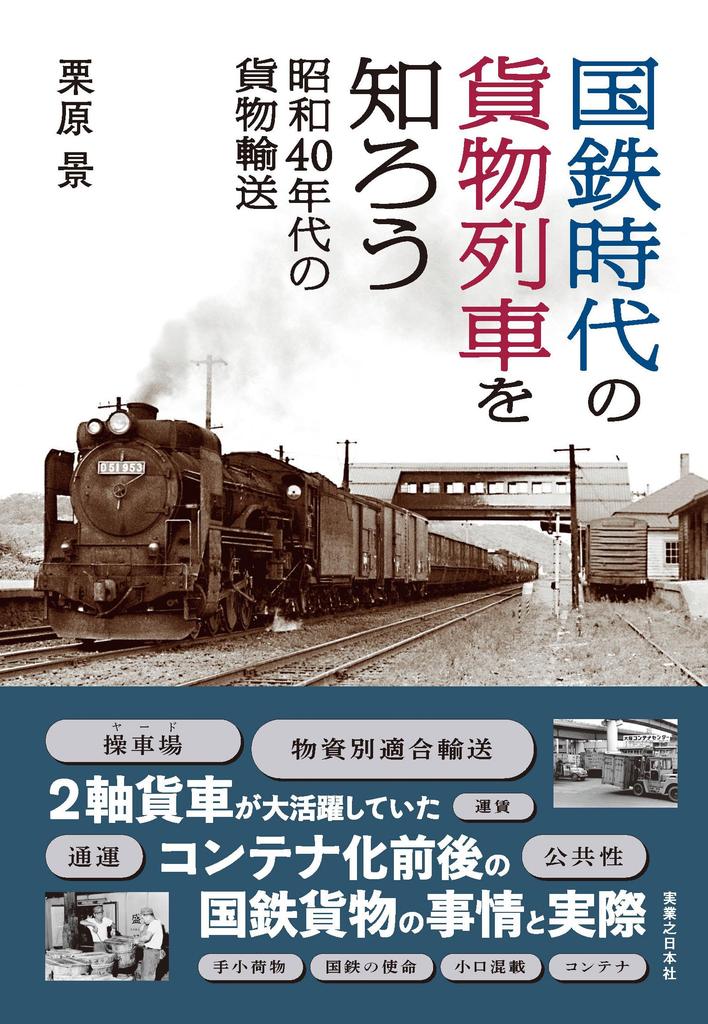
In the 1960s, two-axle freight cars were in full swing, while containerization and marshalling yard rationalization were progressing. JNR freight trains were made up of a variety of freight cars, which were coupled together and detached at freight platforms even at small stations. This program provides an easy-to-understand explanation of the role of JNR freight trains, looking at the history and performance of postwar modernization.
Chapter 1: Differences between Modern Railway Freight and JNR Freight
JNR Freight Transport: Carrying Everything / Special Express Freight Trains / Express Freight Trains / Interregional Express Freight Trains / Dedicated Freight Trains / Capacity Trains and Decoupled Freight Trains
Chapter 2: The Mainstay of JNR Freight Transport: Freight Car Consolidation and Marshalling Yards
Unpredictable Arrival Times / Marshalling Yards: Hugely Time-consuming Sorting / Over 60 Hours for 780km / Modernization of Marshalling Yards / Interregional Express Freight Trains
Chapter 3: The Savior of Rail Freight: The History of Container Transport
The Container Express "Takara" / The Savior: Freightliners / The Tokaido Liner / Struggling to Develop New Customers / Liners Dedicated to Privately Owned Containers / Moving and Containers
Chapter 4: Similar Systems Coexist in the Name of "Public Interest": Small-Lot Freight and Small-Lot Consolidated Freight
While Rail Transport is a Weak Point, "Important" "A Job of Handling Small-lot Freight" / Small-lot Consolidated Freight Utilizing Private-sector Loading and Unloading Technology / Central Station Consolidated Transport Fiercely Opposed by the Trucking Industry / New Consolidated Cargo System / Only the "JNR Directly Operated" Sign Remains in Place Due to Public Interest
Chapter 5: Specific Transport for Each Material Aiming to Tailor Transportation to the Characteristics of the Goods Carried
Shift from Capacity to Quality / Petroleum / Cement / Chemicals / Feed / Paper Products / Automobiles / Steel
Chapter 6: The Star of JNR Freight: The Fresh Fish Express Train
A 100km/h Speed Reduces Travel Time by a Full Day / A Plan Facing Strong Opposition from the Local Fisheries Industry / A Short-lived Peak
Chapter 7: "Forwarding" Is Inseparable from JNR Freight Transport
Forwarding Operators at Both Ends of Railway Freight Transport / Introduction of the Licensed Business System / Postwar End of Monopoly / JNR and Forwarding Become Rivals
Chapter 8: Complex and Mysterious? The Structure of JNR Freight Rates
Calculation Based on the Shortest Route / Daily Necessities Cheap, Luxury Goods Expensive / Freight Classification System / Small-lot Consolidated Cargo Calculated Using Complex "Indexes" / Groundbreaking Container Freight Rates
Chapter 9: JNR's Other Goods Transportation Service: Baggage and Small Parcels
Individuals Could Send Large Packages from Stations Nationwide / Reorganization of Overlapping Services: Unification of Cargo / Railway Parcel Service / Railway Mail Transport
Chapter 10: Main Vehicles Used in JNR Freight Transport in 1790
Final Chapter: Subsequent Transition to JNR Freight and JR Freight


 No-delivery refund