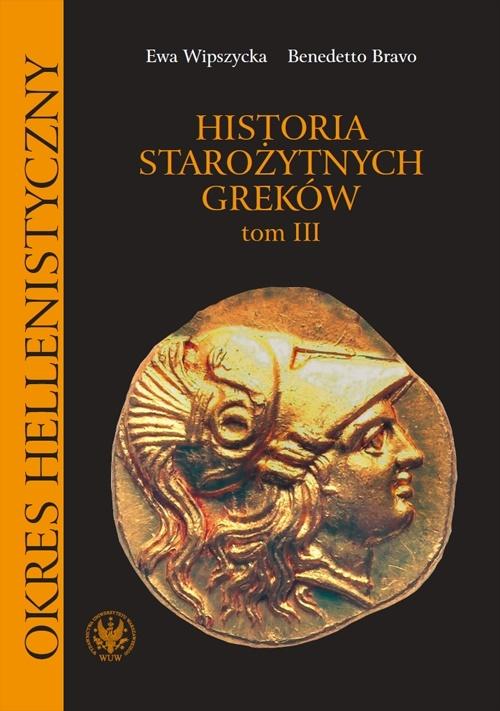
The third volume of The History of the Ancient Greeks opens with the story of Alexander the Great's expedition far to the east, expanding the world in which the Greeks found a place for themselves, their cities, and their culture. The narrative concludes with the emergence of a new, Roman order in this region, when the fate of peoples was decided not by Hellenistic rulers, but by politicians and emperors residing in Rome on the Tiber. Two major themes recur constantly in this volume: the relations between the Greeks and the peoples of the East and their civilizations, as well as the subsequent clashes with the aggressive, expansionist, and brutal Roman Republic. While in the first instance the Greeks achieved a clear victory, as little remained of the civilizations of pharaonic Egypt, Babylon, Syria, and Anatolia, the confrontation with Rome only seemingly ended in Hellas' defeat; in reality, it emerged victorious: the Hellenistic monarchies were unable to defend themselves, but Rome absorbed this civilization and continued its legacy until the end of the ancient world. This text on Alexander is being published for the first time, and the section devoted to Hellenism has been thoroughly revised compared to the previous edition (1992). The past 20 years have brought much change to scholars' views of the era: newly available sources (not only archaeological, but also many papyri and inscriptions), new methods of research, and the analysis of their results have all contributed to this. The need to rethink the entire work and to approach many issues from a new perspective has, despite certain difficulties, also given us great satisfaction. We wanted to share it with our readers, showing how and why the image of Hellenism is undergoing transformations, becoming richer, more complete, and more convincing and evocative to the contemporary reader.


 No-delivery refund