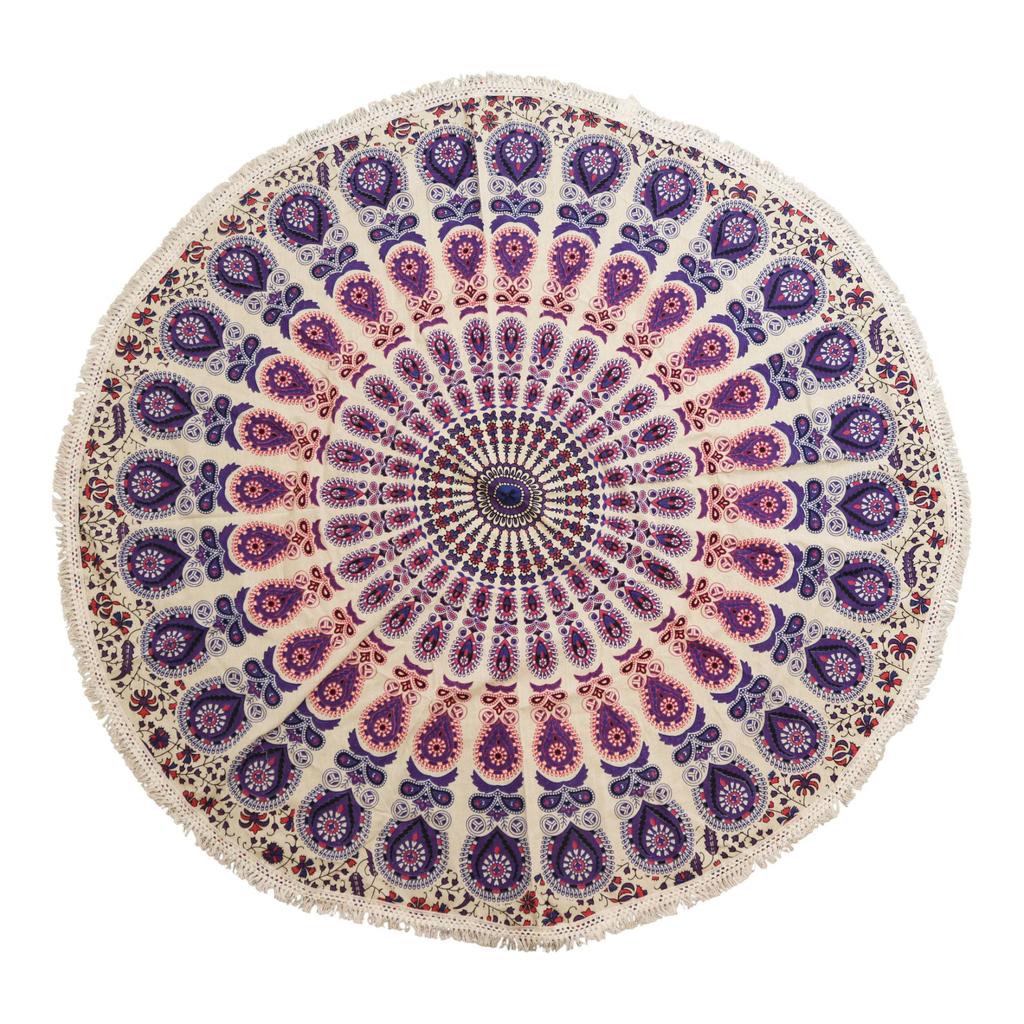
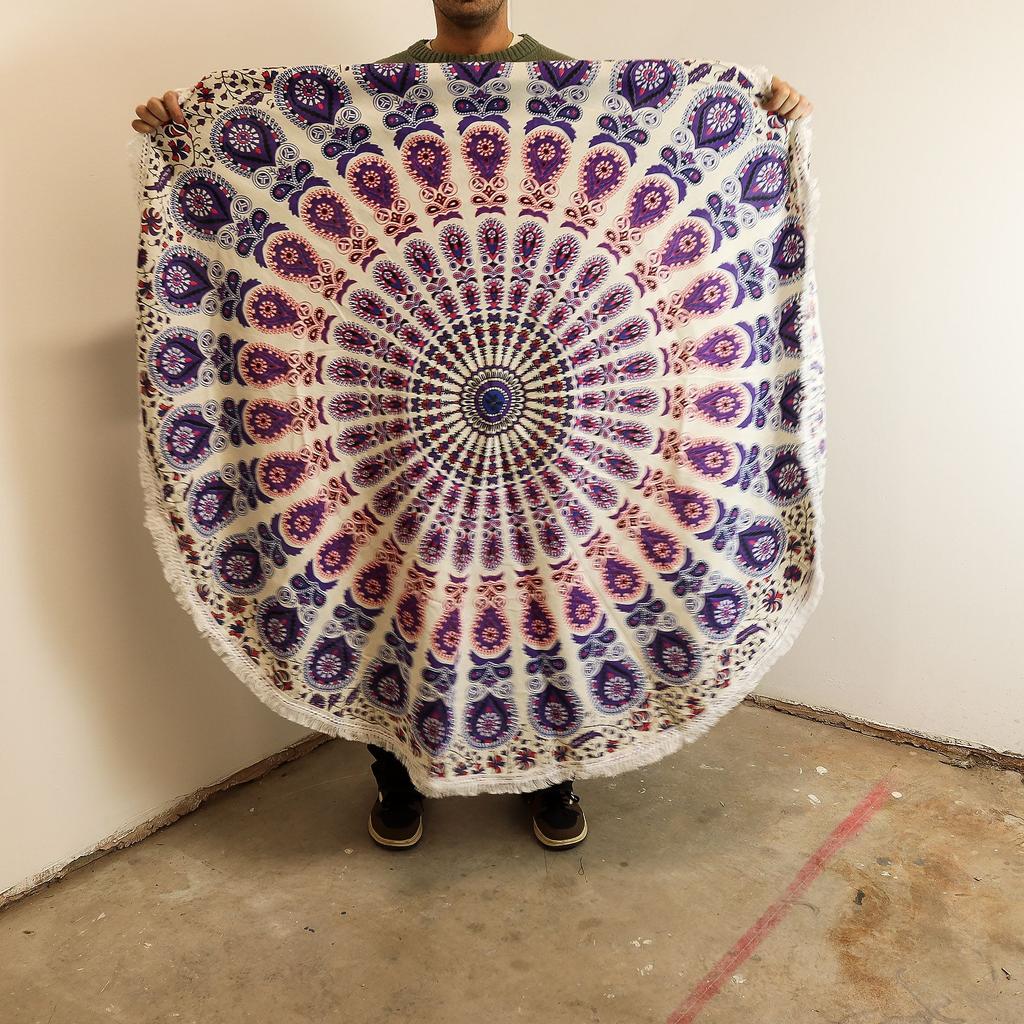
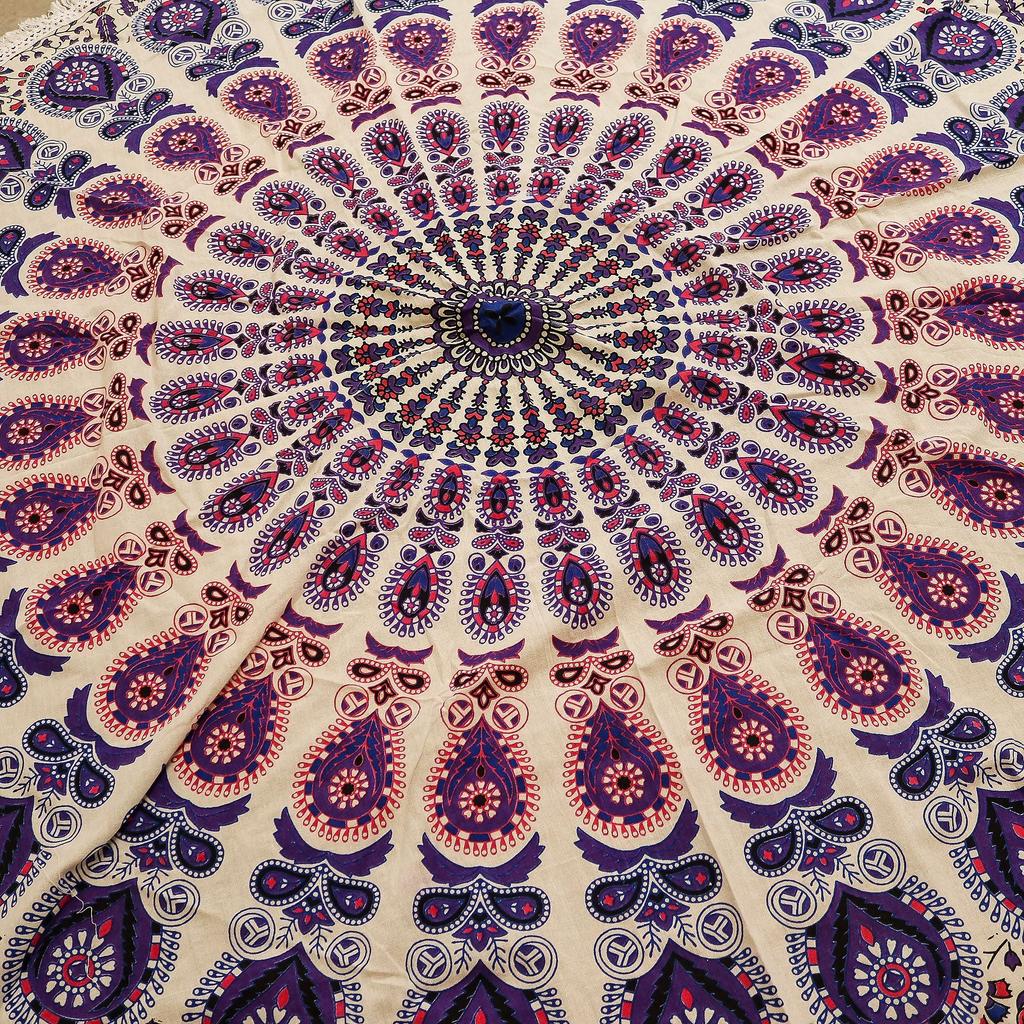
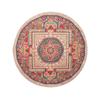
A smaller circular cotton wall art printed with an intricate mandala design in peacock purple tones, measuring 130 cm in diameter. Same 100% cotton, same screen-printing, same fringed edge, handmade in India. See the Large Yellow and Blue description for full foundational content, and the Small Peacock Blues description for information on the 130 cm size.
The Peacock Purples Colour Story
Peacock Purples takes the same iridescent quality that defines Peacock Blues and shifts it into the purple-violet spectrum — the deep, shimmering tones you see in a peacock feather where the blue gives way to violet and magenta under changing light. This is the most richly coloured, most emotionally intense palette in the Small roundie range. It sits at the intersection of blue's calm depth and red's warm energy, creating a colour that is neither relaxing nor stimulating but something more complex: contemplative, spiritual, and slightly mysterious.
Purple has the strongest spiritual association of any colour in the mandala tradition. It connects to the crown chakra (Sahasrara) — the highest energy centre, associated with universal consciousness, spiritual connection, and transcendence. It is the colour most associated with meditation, divination, ritual, and esoteric practice. A mandala in purple is therefore a doubling of spiritual intent: the mandala pattern represents wholeness and the universe; the purple colour represents the seeker's connection to it.
In an interior, Peacock Purples makes a strong aesthetic statement. It works best in spaces that are already aligned with its energy — meditation rooms, creative studios, bedrooms designed for rest and dreaming, yoga spaces, and spiritual practice areas. It can feel too intense for clinical, minimalist, or bright-and-airy interiors. This is the colourway for someone who knows they want purple — and they usually know.
Physical Details
Diameter: 130 cm.
Shape: circular (roundie).
Material: 100% cotton.
Print method: screen-printed.
Colour palette: peacock purple tones (violet, magenta, deep purple, blue-purple).
Edge finish: fringed border.
Handmade in India.
Care: hand wash or gentle machine wash in cold water. Wash separately on first wash. Line dry.
A Note on Gifting
Peacock Purples is the most specific gift choice in the Small range — it is perfect for the right person and potentially too bold for the wrong one. The right person: someone with an active spiritual practice, a love of rich colour, a meditation or altar space, an interest in tarot or divination, or a bedroom in warm, deep tones. If the recipient owns amethyst crystals, burns incense, or has a yoga mat they actually use, Peacock Purples will land beautifully. If you are unsure, Peacock Blues or Teal and Blue are safer. Pairs particularly well with amethyst tumble stones, lavender incense, or a meditation journal as part of a curated spiritual gift.
Common Questions
What is the difference between Peacock Purples and the Large Pink and Purple?
They are different colourways in different sizes. The Large Pink and Purple (180 cm) blends soft pink with purple for a warm, gentle palette. Peacock Purples (130 cm) is deeper and more intensely violet — less pink warmth, more blue-purple depth. The Large is softer and more romantic; the Small Peacock Purples is richer and more esoteric. They complement each other well if displayed in the same space but serve different moods.
Is this suitable for a child's room?
The mandala design and cotton quality are suitable for any age. The deep purple palette may feel too dark or intense for very young children's rooms, where brighter, lighter colours typically work better. For older children and teenagers — particularly those interested in art, creativity, or spiritual exploration — Peacock Purples can be an inspiring and atmospheric wall feature.
Can I pair this with other mandala roundies on the same wall?
Yes. Peacock Purples pairs well with Peacock Blues (shared peacock iridescence) or Classic Blue (shared depth and intensity). Avoid pairing it with the Yellow and Blue or Teal and Blue, as the warm-cool contrast may feel disjointed in adjacent placement. Staggered or overlapping arrangements work best — aligned grids feel too symmetrical for the organic, meditative energy of mandala art.